Plant Propagation
EFB 437/637
Course Schedule - Week 14
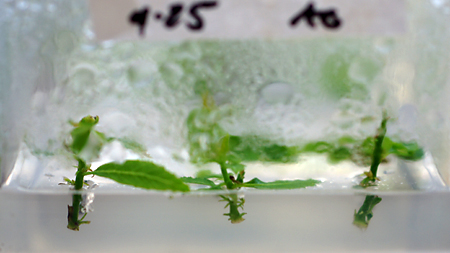
Specifically, we're going to discuss "aseptic micropropagation" techniques that often begin with a shoot tip "explant" that may be less one-half inch long and has fewer than a half-dozen or so fully developed, pre-formed axillary buds (at right). When successful, a single explant can lead to the production of several dozen to more than one hundred new, genetically identical plants within a year!
We'll end the class with a quiz (Quiz #16).
For Wednesday's class, make sure to complete the assigned Chapter 18 - "Principles and Techniques of Plant Tissue Culture from Nonmeristematic Tissue (Adventitious Origin)" readings. It would also be a good idea to watch the related video lectures a second time!
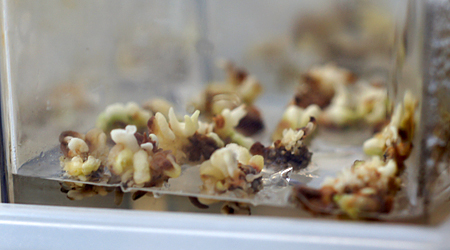
On the other hand, microshoots/cuttings that emerge from non-meristematic tissues such as unorganized "callus" tissues, "rescued" embryos such as those in the image at right, or even from individual cells in a liquid cell culture are potentially less likely to be genetically identical to the plant from which the original tissue was obtained.
In today's class we'll discuss the origin of these "adventitious" shoots and their potential advantages/disadvantages as compared to shoots emerging from pre-formed meristems.
We'll end the class with a quiz (Quiz #17), and I'll return Monday's ungraded quiz (Quiz #16). You'll have until midnight this Friday evening, April 17, to email your score (between 0 and 10 as always) to me, using the Quiz 16 grading rubric and review video at this link.
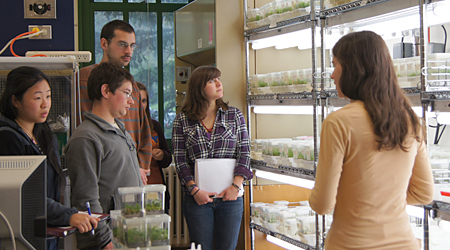
To prepare for this field trip, please review the observations I will expect you to make by going to the Field Trip Observations page.
I will also return Wednesday's ungraded quiz (Quiz #17). As always, you'll find a grading rubric and review video for this quiz here. Please email me your score (between 0 and 10 points) no later than midnight this coming Sunday, April 19.