Plant Propagation
EFB 437/637
Course Schedule - Week 11
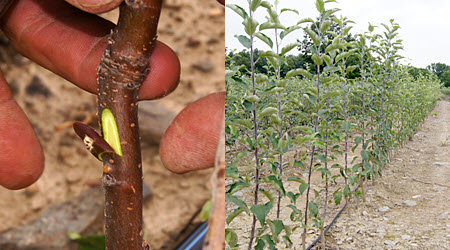
While budding techniques are typically much less complicated (and therefore less perilous to fingers), they are normally performed in the field while bent over at the waist, laying on one's stomach on a low cart, etc. - often under very difficult weather conditions.
We'll end the class with the twelvth quiz of the semester.
Finally, in preparation for Wednesday's class, you're going to want to have read Chapter 15 - "Layering and It's Natural Modifications" (Chapter 14 in the 7th and 8th editions of the textbook) and watched the Chapter 15 video content. You will also find Chapter 26 - "Layering" in the supplemental reference "Plant Propagation: Concepts and Laboratory Exercises" to be helpful as well.
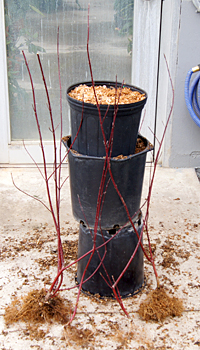
If you didn't take my advice, then you're going to have to rely on your classmates to explain as we'll be breaking into groups to develop short in-class reviews of the various relatively "low-tech" - though highly effective - layering techniques for clonally propagating a wide range of plants. We'll also step out into one of the greeenhouses to unpot several woody shrubs that were layered in May of 2018. If time allows, we may also take a look at the propagation of a variegated rubber tree (Ficus elastica) by air layering.
We'll end the class with the thirteenth quiz of the semester and I'll return Monday's ungraded quiz (Quiz #12). You'll have until midnight this Friday evening, March 27, to email your score (between 0 and 10 as always) to me, using the Quiz 12 grading rubric and review video at this link.
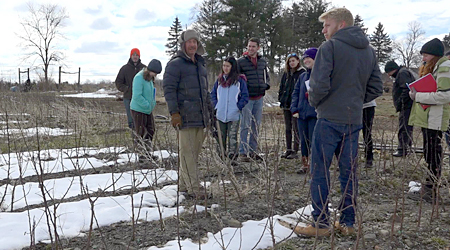
Unless the weather is absolutely awful, we'll walk out into the orchard to observe the scionwood/budwood trees, the production fields (at right), and blocks of producing apple trees. If this works out, you'll have the opportunity to observe firsthand the entire budding/grafting process, and the end product in the field at a bearing age.
To prepare for this field trip, please review the observations I will expect you to make by going to the Field Trip Observations page.
I will also return Wednesday's ungraded quiz (Quiz #13). As always, you'll find a grading rubric and review video for this quiz here. Please email me your score (between 0 and 10 points) no later than midnight this coming Sunday, March 29.
And, with the end of the semester bearing down on us - even if it is only the end of March - please read Chapter 16 - "Propagation by Specialized Stems and Roots" in the textbook and watch the Chapter 16 videos. You will also find Chapter 29 - "Storage Organs" in the supplemental reference "Plant Propagation: Concepts and Laboratory Exercises" to be helpful.